Do Therapy Websites Still Matter for AI Search?

AI is changing how people search for therapy. But does that mean your website is becoming less important? I don't think so. Here's what therapists need to understand about AI search and what it means for their private practice.
The Way People Search for Therapy Is Changing
Think about how someone might look for a therapist.
A few years ago, they might have opened Google and searched for "anxiety therapy in Toronto."
They would scroll through the results, visit a few websites, read therapist profiles, and decide who to contact.
That still happens today.
But now, someone might open ChatGPT or Google's AI search and ask:
"I'm feeling anxious all the time. I want to talk to someone, but I've never been to therapy. How do I find a therapist who can help?"
Instead of getting a list of websites, they may receive an answer that explains their options. They might even get recommendations for therapists in their area.
This is a big change.
And I believe it will affect how therapists attract new clients over the next few years.
Therapists are starting to share that new clients are finding their practice through ChatGPT, and one client called it "the new Google." Others have told me they found Designed By Thrive the same way.
Over the last six months, about 130 visits to Designed By Thrive's own website came from AI tools such as ChatGPT, Perplexity and Gemini. That's a small number, but it shows people are already finding my business this way.
But I don't believe it means your website is becoming less important. I believe it means your website needs to do a better job of explaining who you are and how you help.
The Three Stages of How People Find Therapists
To understand what's happening, it helps to look at how online search is changing.
We're moving from a world where people search for websites to one where AI can help them find answers, compare services, and eventually take action.
There are three stages to this shift.
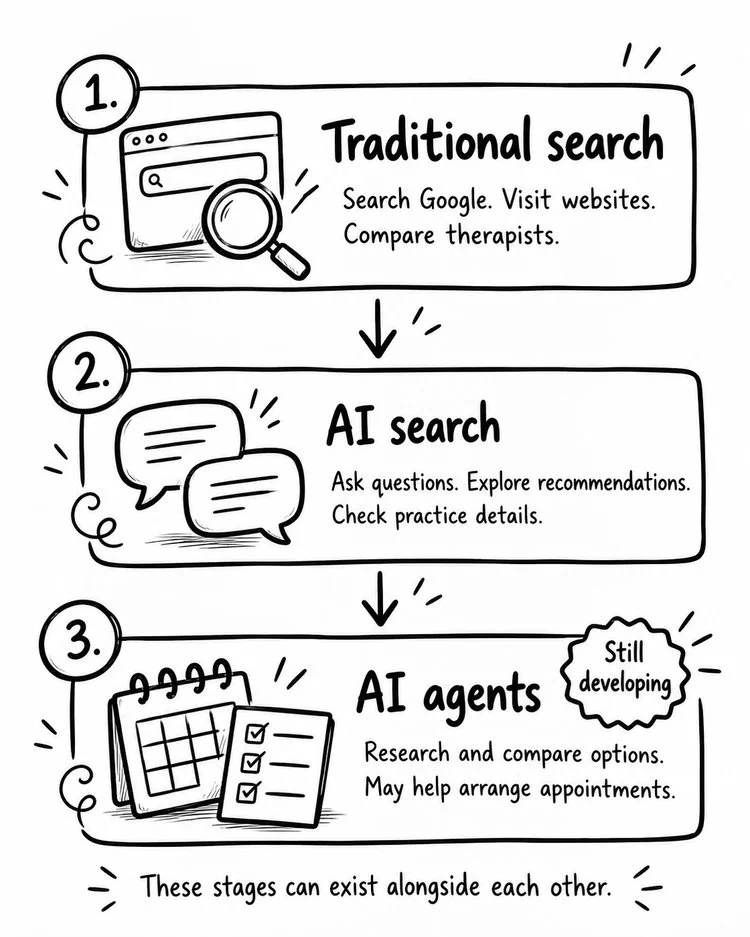
Stage 1: Traditional Search
This is the familiar way of finding a therapist.
Someone searches Google for "anxiety therapy in Toronto."
They review the results, visit a few websites, read therapist profiles, and contact someone who seems like a good fit.
Your goal is to appear in search results, attract visitors to your website, and help them feel comfortable reaching out.
Traditional SEO and good website design support this process, but this path is quickly changing.
According to SparkToro, 68% of U.S. Google searches ended without a click. That means Google’s search results are bringing fewer people to your website when an AI answer is shown.
Traditional SEO still matters. But we need to start thinking beyond rankings and website clicks, and prepare for how AI is changing the way potential clients find and choose a therapist.
Stage 2: AI Search
Now, someone might ask ChatGPT:
"Can you recommend therapists in Toronto who specialize in anxiety and offer virtual sessions?"
Instead of visiting several websites, they may receive a list of options with information about each practice.
They can ask follow-up questions about fees, therapy approaches, and availability.
AI may help them narrow their options before they ever visit a website.
Your goal is no longer just to appear in search results. You also want AI tools to have enough accurate information to understand your practice and consider it when making recommendations.
This stage is already happening. How prepared are you for this AI shift?
Stage 3: AI Agents
The next stage of AI goes beyond answering questions. It could start to take a more active role in helping people find a therapist and complete tasks on the client's behalf.
Imagine someone asking:
"Find me a therapist in Toronto who works with anxiety, offers virtual sessions, charges less than $200, and has appointments available next week."
Instead of suggesting options, an AI agent could compare practices, check available appointment times, and, with the person’s permission, book an initial consultation, without ever visiting your website.
This could mean a potential client’s first interaction with your practice happens through an AI tool. Your website would need to make your services, fees, availability, and booking steps clear enough for both people and AI to understand.
This stage is still developing. AI agents are beginning to handle certain types of bookings, but finding and booking therapy involves additional concerns, including privacy, consent, and making sure the service is appropriate.
For now, the important thing is to make your practice information accurate, complete, and easy to access. A clear, working booking link is part of that.
What This Shift Really Means
These three stages will likely exist alongside each other for some time.
Some people will continue searching Google. Others will ask AI for recommendations. And some may eventually use AI assistants to help them take the next step.
The biggest difference is how people move from searching for help to deciding who to contact.
Your website may no longer be the first place someone learns about your practice. But it remains an important source of information that helps people and AI systems understand what you offer.
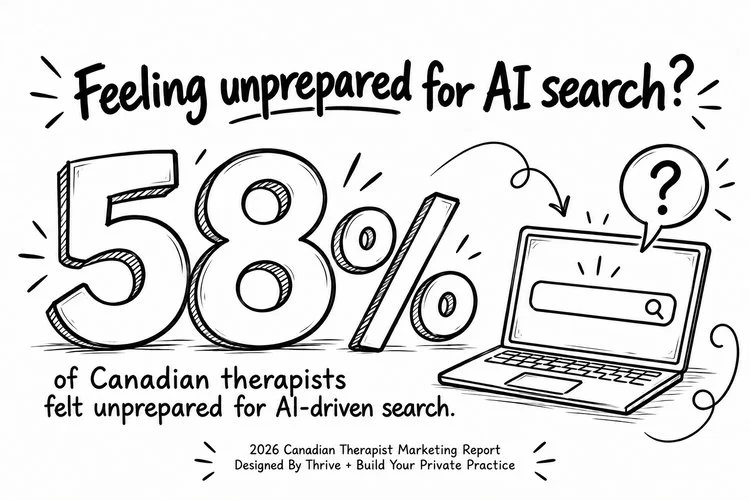
In the 2026 Canadian Therapist Marketing Report, 58%of therapists said they felt unprepared for changes in how AI affects online search. The report is a joint study by Designed By Thrive and Build Your Private Practice.
I understand that concern. It's a lot to keep up with while running a practice. But I don't believe the answer is to start over. It starts with clear, helpful information on your website.
People Are Already Clicking on Fewer Websites
We have some early research showing how AI is changing search behaviour.
A 2025 study from Pew Research Center looked at how U.S. adults used Google.
When Google showed an AI summary, people clicked on a regular search result in just 8% of visits.
Without an AI summary, that number was 15%.
That is a meaningful difference.
A 2026 BrightLocal survey also found that 45% of U.S. consumers surveyed had used AI tools to find local business recommendations, up from 6% the year before.
These studies are U.S.-based and not specific to therapy. Still, they show that people are starting to find businesses in new ways.
Here's why I think this matters.
For years, getting more people to visit your website was one of the main goals of online marketing. Now, someone might learn about your practice through an AI answer before they ever visit your website.
They might also get enough information to decide whether you're worth contacting.
Your website may not always be the first place someone finds you. But it can still play an important role in whether they choose you.
Your Website Is More Than an Online Brochure
I often see therapy websites that look beautiful but don't explain enough about the practice. They might have a welcoming homepage, a list of services, and a short therapist bio.
But imagine someone asking AI:
"I'm looking for a therapist in Toronto who works with postpartum anxiety, offers online sessions, and charges less than $220."
To answer that question, an AI tool needs information. Does the practice work with postpartum anxiety? Which therapist offers that support? Are online sessions available in Ontario? What does a session cost?
If these details aren't clearly explained online, an AI tool may have trouble finding the answers. That doesn't mean adding this information will guarantee a recommendation. It does mean you're making it easier for both people and search systems to understand your practice.
And that's something worth improving.
Stop Creating Content Just to Have More Content
This is where I think therapists have an opportunity. Many practices have spent years publishing blog posts because they were told blogging helps with Google rankings.
Some of those articles are useful. Others repeat information that already exists on hundreds of websites.
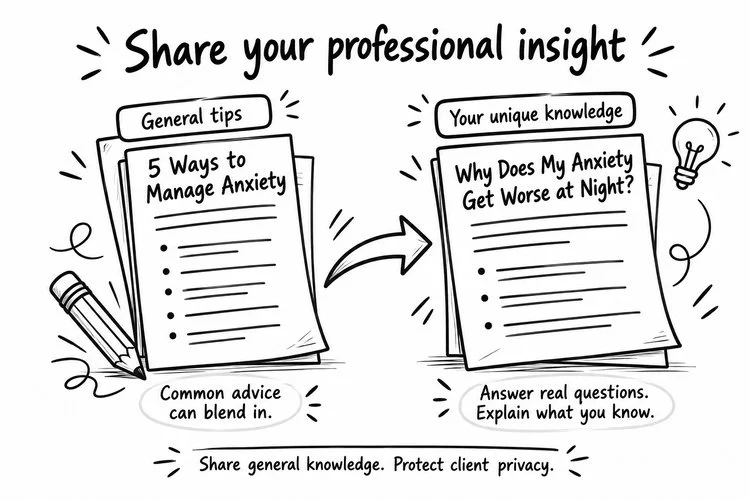
Think about an article called "5 Ways to Manage Anxiety." There's nothing wrong with that topic. But if the article shares the same basic tips found everywhere else, what does it add?
Now consider a different article:
"Why Does My Anxiety Get Worse at Night?"
A therapist could explain what might contribute to nighttime anxiety, what people commonly misunderstand, and when professional support may help.
The article could reflect the therapist's own approach and professional knowledge. That's the kind of content I believe practices should focus on.
Several therapists have told me they worry that if everyone relies on AI, every practice will start to sound the same. I share that concern. It's one more reason your own voice and professional experience are worth putting on your website.
Google's 2026 guidance on AI search supports this direction. It encourages website owners to create useful, original content rather than repeat what is already available online. Google describes "commodity" content as common knowledge that adds little unique insight. I cover this in more detail in How AI Affects SEO for Therapists.
You don't need to publish more content just to stay visible. You need content that answers real questions and gives people a reason to trust you.
For therapists, those questions can come from common concerns people raise before starting therapy.
Of course, protecting client privacy must always come first. Content should be based on general themes and professional knowledge, not identifiable client stories or private conversations.
Be Clear About the Practical Details
There's another part of therapy websites that often gets overlooked.
Basic information.
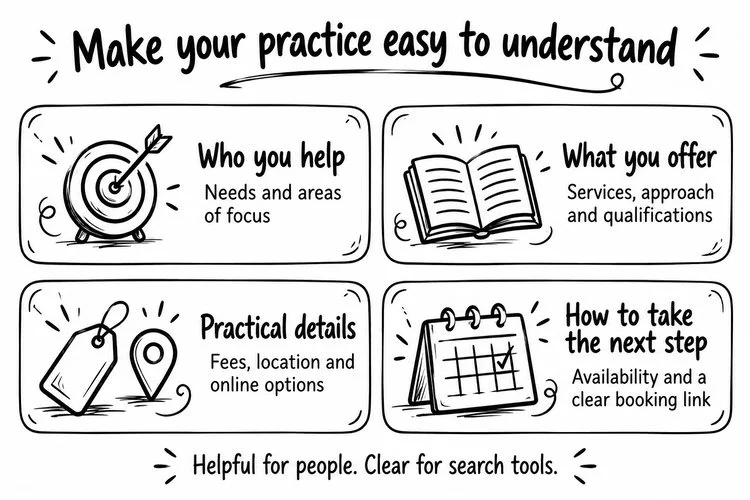
How much does therapy cost? Do you offer online sessions? Are you accepting new clients? What happens during the first appointment?
These might seem like small details, but they matter when someone is deciding whether to reach out. They also help search tools understand your services. I've always believed that making someone work harder to find basic information is a missed opportunity.
Someone considering therapy may already feel uncertain about taking the first step. They shouldn't have to search through five pages to find your fees or figure out how to book a consultation.
And if AI is helping them compare therapists, clear information becomes even more useful. If listing fees feels uncomfortable, a range or a "starting at" figure is still more helpful than nothing.
You don't need a complicated system to make this happen. You need a website that answers the questions people are already asking.
If your fees, online options, or booking steps are hard to find, a quick website review can show you where to start. Get your free website report.
Does This Mean SEO Is Dead?
Not at all. In fact, Google has been clear about this.
Its official guidance says that traditional search engine optimization, or SEO, remains important for AI search. Google's AI search features still use its search systems to find relevant websites and information.
That means the work you've been doing to improve your website still matters. Your service pages, therapist profiles, local search presence, and website content all have a role.
What I think is changing is how we define success. Getting someone to visit your website is valuable.
But being mentioned as a relevant option when someone asks AI for a therapist may also become an important part of being found.
We need to pay attention to both.
One caution: Google's guidance applies to Google. Other AI tools may pull from a different mix of sources. The BrightLocal survey found ChatGPT was the most-used AI tool for local recommendations (31%), ahead of Google AI Mode (23%). These tools can draw on your website, local directories, and other third-party sources, so keeping your information consistent everywhere matters.
How Should Therapists Prepare for AI Search?
Start by understanding how your practice appears online today and what needs to improve.
Can people easily find your services? Is your information accurate across your website and directories? When AI tools mention your practice, do they describe it correctly?
Open ChatGPT, Gemini, or another AI search tool and try questions a potential client might ask:
“Can you suggest therapists in [city] who help with anxiety and offer virtual sessions?”
“I’m looking for couples therapy in [city]. Which practices offer evening appointments?”
“What can you tell me about [your practice name], including its services, fees, and how to book?”
Did your practice appear, and are the details correct? Follow the source links and check them against your current website.
Clear website content is an important foundation. But preparing for AI search also means reviewing how your information is organized, finding gaps, and keeping it current as your practice grows.
The right tools and support can help you manage that work. Their value should come from the problem they solve, whether that is keeping practice details consistent, checking AI recommendations, or helping you decide what to improve next.
You may be able to build on your existing website. If a redesign is needed, it should include a plan to protect the visibility you already have.
The goal is to build a clear, reliable online presence that supports your practice today and can adapt as search changes.
Five Things I Would Focus on Right Now
If you're wondering what to do next, I would start with these five areas.
1. Review your service pages.
Make sure each important service explains who it's for, how you help, and what someone can expect.
2. Update your therapist profiles.
Clearly explain each therapist's qualifications, areas of focus, and approach to therapy. Help people understand what it might feel like to work with them.
3. Make important information easy to find.
Include fees, locations, online therapy options, insurance or extended health coverage information, and clear next steps.
4. Write about real questions.
Think about what people want to understand before starting therapy. Create helpful articles that reflect your professional knowledge and experience.
5. Keep your online information accurate.
Check that your website, Google Business Profile, and relevant therapist directories provide consistent information about your practice. I wrote more about directories in Should Therapists Still Use Psychology Today in 2026?
You don't need to complete everything at once. Start with the pages that are most important to someone considering your services.
If you want more detail on the first two areas, I wrote about How to Help AI Recommend Your Therapy Practice.
My Take: Your Website Isn't Going Away. Its Job Is Changing.
I work with therapists who want to be found online but don't have endless time to spend on their websites and content. So when I hear people suggesting that every business needs to rebuild its online presence for AI, I'm cautious.
Yes, search is changing. And yes, I believe therapists need to understand how AI may influence the way people find support.
It's also fine to feel unsure about AI. Many therapists tell me they have ethical questions about it, and those questions are worth taking seriously. Understanding how AI affects search doesn't mean you have to use it in your practice.
But I don't think the answer is another complicated marketing system or publishing more content every week. I think the answer starts with being clear.
Be clear about who you help. Be clear about the services you offer. Share what you know. Make it easy for people to take the next step.
A good therapy website should help someone feel informed and confident about reaching out. It should also provide accurate information that search engines and AI tools can understand.
Those two goals aren't competing with each other. They're becoming more connected.
And regardless of how much AI changes the way people search, I believe one thing will remain important.
People looking for therapy still want to feel understood before they reach out.
Your website is one of the places where that connection can begin.
Want to understand what these changes mean for your practice?
Join me on October 27 for How Therapists Get Found Online: A Better Way to Plan and Create Content for Your Practice. We'll look at how search is changing, what content matters now, and how to create a clearer plan without adding more to your plate.
FREE LIVE WEBINAR
How Therapists Get Found Online
A Better Way to Plan and Create Content for Your Practice
Frequently Asked Questions
Will AI replace therapy websites?
Your website still gives potential clients a place to understand your approach, check practical details, and decide whether to contact you. AI may change how they discover your practice and how much research they do before visiting.
What is the difference between traditional SEO and AI visibility?
Traditional SEO helps your website appear in search results. AI visibility is about whether AI tools mention your practice, describe it accurately, or use your content in their answers. Clear, useful content and accurate practice information support both.
How can I check whether AI recommends my practice?
Try a question a potential client might ask, such as “Can you suggest therapists in [city] who help with anxiety?” Then ask about your practice by name.
These searches check different things: whether AI suggests your practice and what it says when someone already knows your name. Ask for sources and check the details. Results can vary, so repeat the exercise over time.
Does giving AI my practice information help other people find me?
Giving information to the AI you work with helps it create content with more context about your practice. It does not automatically teach public AI tools to recommend you to other people.
Use Your Practice’s Story to create accurate, helpful information for your website and other public channels.
Do I need to rebuild my website for AI search?
Start by reviewing your existing site. You may need clearer service descriptions, updated practice details, or easier navigation rather than a full rebuild.
If a redesign is needed, include a plan to preserve useful content and existing search visibility.
What should I do first?
Check how your practice appears in search and AI answers. Then bring together Your Practice’s Story: who you help, how you work, your qualifications, services, fees, and answers to common questions.
Use that information to fill gaps on your website and keep your public listings consistent. Review it whenever your practice changes.