
Therapist Website Builder: Squarespace vs WordPress for Private Practice Websites
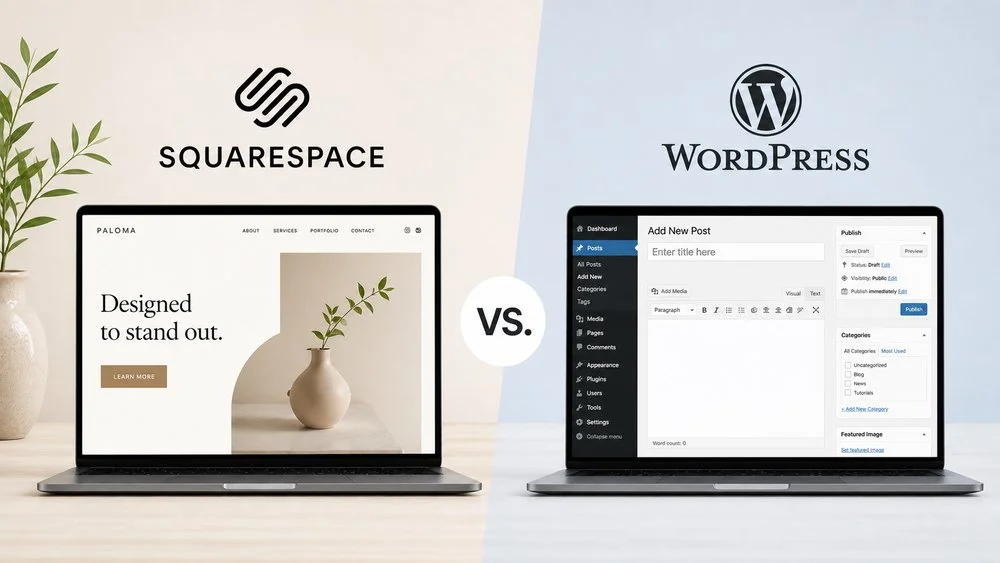
Most therapists do not need the most customizable website builder. They need a platform that makes it easier to create a clear, professional website and keep it up to date without extra technical work. For most private practices, Squarespace is usually the better fit than WordPress. This approach can help therapists feel more confident and less overwhelmed in managing their site.
What Therapists Actually Need From a Website Builder
Therapists usually need a website builder that reduces friction, not one that adds more options.
What I see most often is not a lack of features but a disconnect that hinders therapists' ability to update their sites to reflect their current work, making management feel more straightforward and aligned with their practice.
A common pattern: a therapist knows their site is off, but keeps putting it off. The language feels generic, the pages feel outdated, and they hesitate to send potential clients there. That hesitation matters more than any feature list.
What tends to work better is simpler:
A site you can update without second-guessing the process
Pages that clearly explain who you help and how you work
Structure that helps someone quickly decide if this feels like a fit
A platform you will actually keep current
The goal is not more capability. There is less friction between your actual practice and the person reaching out.
How Is Squarespace Different From WordPress for Therapists?
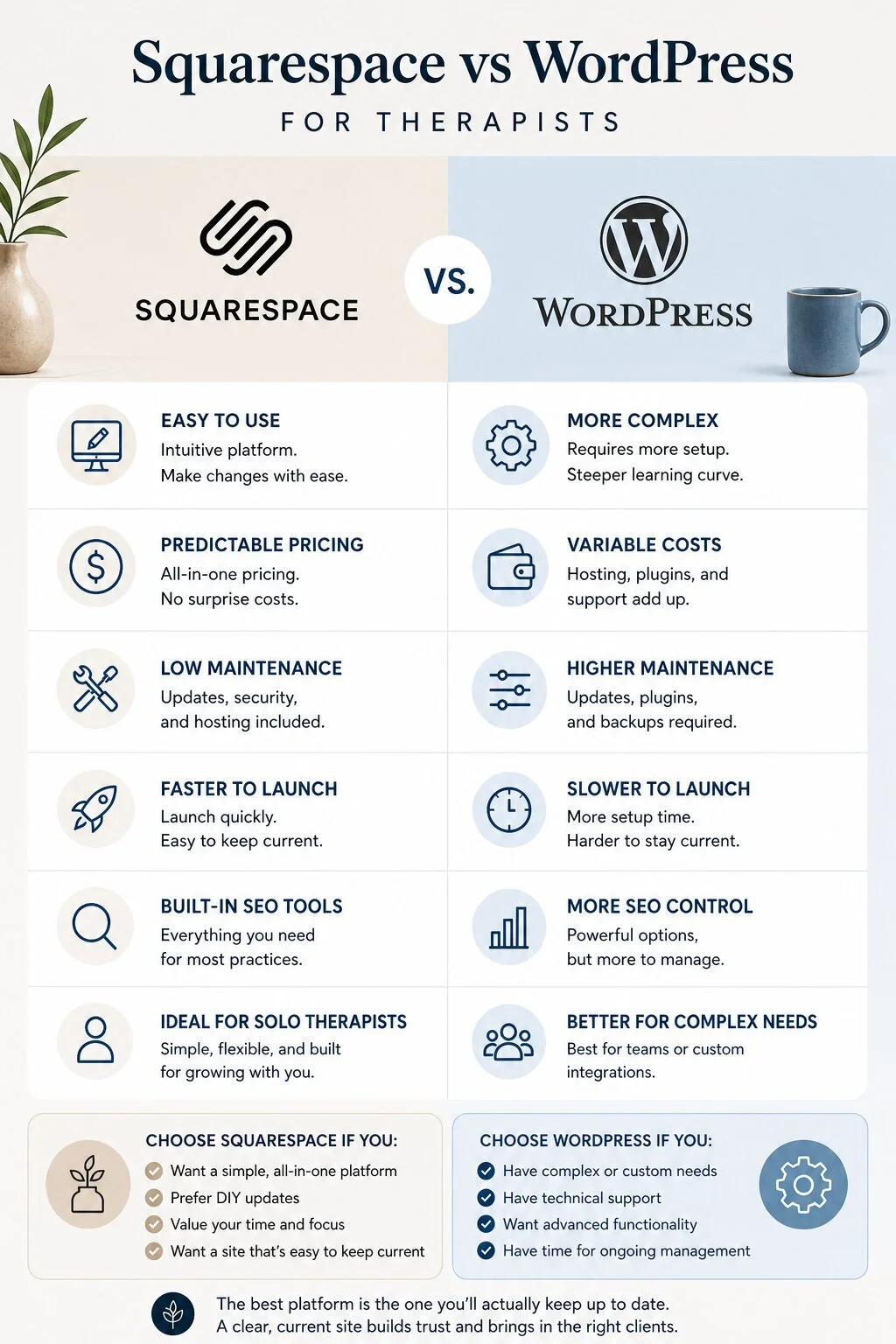
The main difference is the effort required to keep your website aligned with your practice over time. Squarespace is usually easier to manage. WordPress offers more flexibility, but it also introduces more moving parts, plugins, updates, and layout tools that you need to keep track of. For most therapists, the better website builder is the one they will actually keep up to date. If making a small change to a service page feels like a project, it often doesn’t happen. Over time, the site stops reflecting the practice, even if the work itself has evolved.
Ease of use and day-to-day management
Squarespace is built so you can log in and make changes without needing to think about how the site is structured behind the scenes.WordPress can work well, but it often requires more attention. Even small updates can depend on how the site was set up, making simple edits feel less straightforward. The difference shows up later. One platform tends to stay current. The other often gets avoided.
Cost and hidden complexity
Squarespace is more predictable. Hosting, security, and core tools are already included. With WordPress, the cost is less about the monthly fee and more about what builds up over time:
Paid plugins or themes
Ongoing maintenance
Time spent figuring out what needs attention
For most therapists, the real cost is not technical. It’s the mental load of managing something outside their area of focus.
SEO and visibility
A common mistake is assuming WordPress is automatically better for SEO. In practice, most therapists don’t struggle because of the platform. They struggle because their site doesn’t clearly explain who they help, or hasn’t been updated in a while. Focusing on clarity and messaging can help therapists feel more capable of shaping their online presence. Google’s own guidance focuses on helpful, people-first content rather than which system you use.
I’ve worked with therapists whose WordPress sites were technically solid but still brought in the wrong inquiries. The issue wasn’t the setup. It was that the site didn’t make the work easy to understand.
When Is Squarespace the Better Choice for a Therapy Practice?
Squarespace is usually the better choice if you want a website you can realistically keep up to date. This tends to fit therapists who:
Run solo or small practices
Want to make their own edits
Don’t want to rely on a developer
Need something that stays aligned as their practice evolves
A pattern that comes up often: a therapist builds a site that feels right at the time, but their work becomes more focused as time goes on. They want to refine how they describe it, but every change feels like more effort than it should. So the site stays the same. Eventually, it stops matching the practice.
Squarespace tends to work better in these situations because it removes that barrier. It makes it easier to keep the site accurate and up to date, which is what actually builds trust. A site that feels clear and up to date, supported by a simple platform, almost always builds more trust than one that is more complex and harder to maintain, helping therapists connect more effectively with clients.
If you’re trying to build something that feels aligned and easier to manage, this is where thoughtful therapist website design starts to matter. The platform supports the site, but it doesn’t replace the thinking behind it.
When Might WordPress Make Sense for a Therapist?
WordPress can make sense if you have specific needs that require it. That usually looks like:
A larger group practice
Custom integrations or systems
Ongoing technical support
A reason to manage a more complex setup.
If someone else is handling the technical side, the added flexibility can be useful. But for most therapists, this isn’t the situation. The platform ends up creating more decisions, more upkeep, and more distance from the site itself.
WordPress powers a large portion of the web, which is why it is often treated as the default. But popularity does not equal fit. In practice, what matters is whether the site actually helps someone understand your work and feel comfortable reaching out.
Why Won’t a New Website Builder Fix an Unclear Website?
A new website builder won’t fix a website that doesn’t clearly reflect your practice. If the language is vague, if it’s not clear who the work is for, or if the structure makes it hard to find key information, switching platforms won’t change the outcome.
I’ve seen this directly. A therapist rebuilt their site on a new platform, hoping it would fix things. The design improved, but they were still getting inquiries that weren’t a good fit. When we looked closer, the issue was simple. The site still didn’t explain the work clearly or show how they approach it, highlighting that messaging and structure are more critical than the platform itself for effective communication.
The platform changed. The confusion didn’t.
This is why platform decisions can’t be separated from messaging and structure. If the site doesn’t make sense to the reader, the technology behind it doesn’t matter much. This is also where combining website copy and messaging support with SEO for therapists becomes important. It’s not just about building the site. It’s about making it clear enough to work.
How Should Therapists Choose a Website Builder Without Overthinking It?
Choose the platform that makes it easier to keep your website accurate and usable over time.
A simple way to think about it:
Choose Squarespace if you want something you can manage yourself without it becoming another ongoing task
Choose WordPress if you have a clear reason for the added complexity and support to manage it
Pause the decision if the bigger issue is that your website still feels unclear
Most therapists don’t need more options. They need something that fits how their practice actually runs.
If your website feels hard to manage, unclear, or out of step with your work, the platform is only part of it. The bigger shift usually comes from clarifying how the site presents your practice and ensuring it’s structured in a way that’s easy to maintain.
If you want help working through that and building something that actually feels aligned, you can reach out here. The goal isn’t just a different platform. It’s a website that you feel confident sending people to.
Not getting client leads from your website?
Take a few minutes to understand what may be getting in the way.
FAQs: Therapist Website Builder Questions
Is Squarespace or WordPress better for therapists?
For most therapists, Squarespace is the better choice because it’s easier to manage and doesn’t add extra technical work. WordPress can make sense for more complex setups, but many therapists don’t need that level of flexibility.
Is WordPress better for SEO than Squarespace?
Not automatically. Most SEO issues stem from unclear messaging or an outdated site, not the platform itself. A clear, well-structured Squarespace site will often perform better than a more complex site that isn’t maintained.
Does Squarespace look professional enough for a private practice?
Yes. A site that feels clear, current, and aligned with your practice will come across as more professional than one that is more complex but harder to maintain.
Can I switch from WordPress to Squarespace later?
Yes. Many therapists make this switch when they want something easier to manage. The more important part is making sure the new site is clearer and easier to keep updated.
What matters more than the website builder itself?
What matters most is whether your website clearly reflects your practice. If it doesn’t, changing platforms alone won’t fix the problem.
